Published 4 min read
Three days with Claude Fable 5.2: what changed
Anthropic's newest model ran my build work this week. What it did well, where it went wrong, and what it means if you pay for software.
Nick TaylorFounder of Pitstop Technologies. Junior engineer to CTO.
Anthropic released Claude Fable 5.2 on 9 November. I switched my build work to it the same week, on this website, with real deadlines and my own money. This is a short account of what changed, written for people who pay for software more than for people who write it.
I'm not going to tell you it is magic. It did some things this week that I would not have believed a year ago, and it also made mistakes a junior would be embarrassed by. Both matter if you're deciding how much to trust work that AI helped produce.
What it is, in plain terms
Fable 5.2 is the model Anthropic describes as its most capable for technical work. It follows Fable 5 in June and Fable 5.1 in September. On Anthropic's price list it costs $8 per million input tokens and $40 per million output tokens, down from $10 and $50 for the previous version.
Anthropic publishes benchmark results with the release. On FrontierSWE, a test of long software tasks, it scores 69.9%, against 56.3% for Fable 5.1. On the Remote Labor Index, a test built from paid freelance-style work, it goes from 17.9% to 41.3%. These are the vendor's own numbers, and the same table shows it does not lead everywhere: on AutomationBench, a test of business workflows, a Google model edges it. Anthropic's own advice is to start with its Opus model for everyday coding and knowledge work, and keep Fable for large, loosely defined problems.
That last sentence is the useful one. This is a tool for the hard end of the job.
What it did well this week
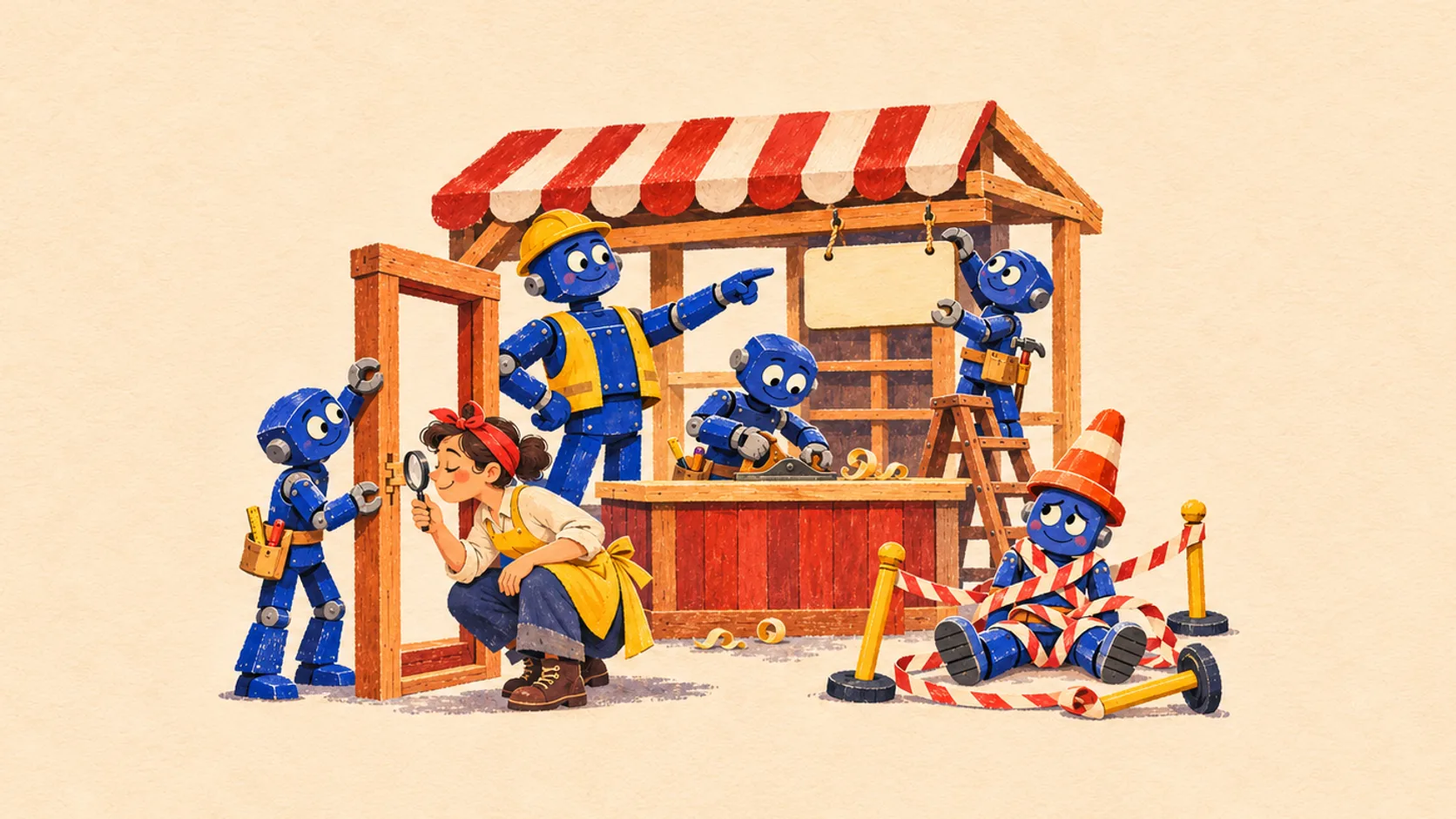
It ran a small team. I use it in Claude Code, where one session can act as a lead and hand pieces of work to other agents. On 11 November three pieces ran side by side, each in its own copy of the code: a batch of small defects, a new section of the home page, and a rebuild of my project enquiry form. Each one was built by one agent and then checked by a different one before I merged anything.
The checks caught real things. Its first design for the enquiry form would have crashed the form on load. A second agent, asked to review the design as an architect, found that before a line was written. Later a code review noticed that a tidy-up of wording had dropped the word "agreed" from my support terms in English, which would have quietly promised more than the Romanian version did. Nobody asked it to look for that, and it was caught before anything went live. It also found a button that was hidden on phones but could still take keyboard focus.
It found a release problem by reading. While researching something else, it noticed that a deployment file had the enquiry endpoint set to empty. Applying that file would have turned my enquiry form back into an email link. It checked the live site first, confirmed the live site was fine, told me, and rebuilt the file from the correct settings.
Where it went wrong
Tests passed, and real services still said no. A tool I'm building reads a public web page and reports on it. Every automated test passed. The first run against the real services failed four times, each on a detail of a third-party service that no test of mine could see. None of those could have been found without running the real thing.
It tripped over its own process. It started a planning step that paused the agents it had just set to work. One agent applied the wrong saved changes and had to put two files back.
None of that reached a customer, because none of it was unsupervised. Each mistake was found by a check, by a second agent or by me asking what was taking so long.
What this means if you pay for software
Work is getting faster. Some changes that used to take a week of one person's attention can now be designed, built, reviewed and tested in a day or two. That is real.
What has not changed is where the safety comes from. This week it came from four places: a second reviewer that did not write the code, tests that run against real services, a rule that nothing goes live without my say, and a written record of what was and was not verified. The model is good at producing those checks when asked. It does not replace the decision to have them.
So the question to ask a supplier is the same one I wrote about in AI fixed the bug. Who checked the fix?: who checks the work, and who answers for it afterwards. If the answer is "the AI is very good now", keep asking.
If you're wondering where a model like this would actually earn its cost in your business, that is what my AI and automation work starts with: one process, one measurable result.
One last thing, in the interest of honesty. The first draft of this article was written by the model it describes, from the record of the week's work. Seemed only fair.