Published 4 min read
Should I replace my software subscriptions with tools built using AI?
If you only use a fraction of an app, a smaller bespoke tool can make sense. The decision depends on the workflow, the wider product and who looks after it.
Nick TaylorFounder, Pitstop Technologies
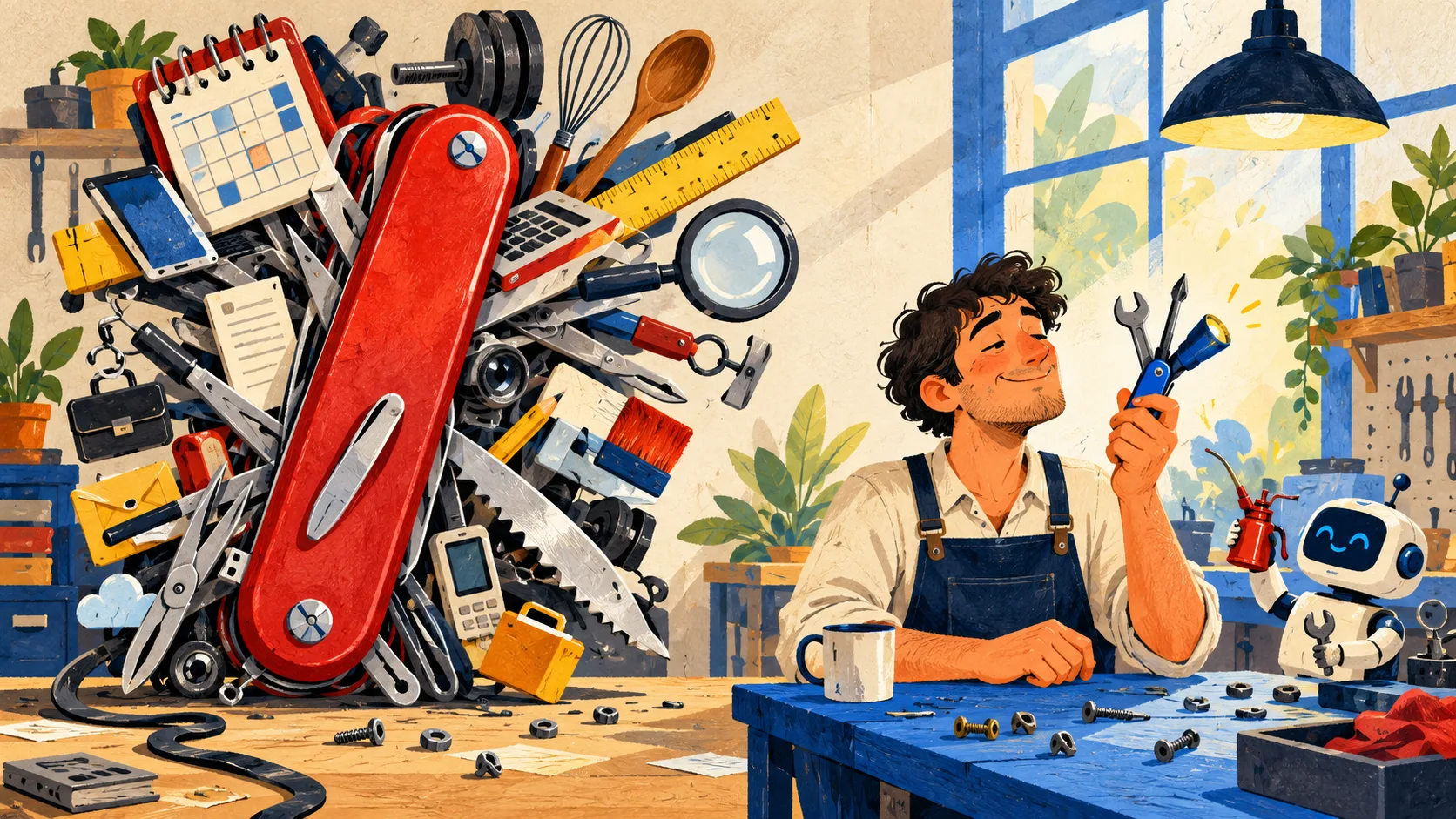
You open an app, use the same three screens and ignore everything else. Then the subscription renews. If AI can help you build those three screens, why keep paying for the whole thing?
I think that is a sensible question. A small tool made around your habits can be a better fit than a large product. I would happily consider a personal workout log, calorie tracker or focused calendar view on that basis.
But I would not turn that into “cancel every subscription and rebuild everything”. The visible app is only part of what you are buying, and a working first version is only part of what you are building.
Keep, connect or build
Three good answers. Different responsibilities.
Compare delivery, hosting, integration, upkeep and exit costs, not just the subscription line.
Using 10% is a clue, not the calculation
Imagine that you use roughly a tenth of a product's features. That might mean it is too broad for your needs. It might also mean the part you use is valuable enough to justify the price.
A calendar is a good example. Your favourite screen might be a simple weekly view. Behind it, you may rely on invitations, shared availability, time zones, reminders and synchronisation across devices. Recreating the view does not replace those connections.
A tailored interface that works with your existing calendar could be the right answer. You get a simpler experience while keeping the underlying service. Before choosing, we would check what the service actually allows, how access is authorised and whether an integration adds costs or restrictions.
The useful question is: what are you paying for that you would genuinely stop needing?
Separate the personal experiment from the business system
A private workout log can start with a few exercises and a history of sessions. A calorie tracker might simply record entries you provide, without trying to give nutritional advice. If these are personal experiments, you can decide how much inconvenience a defect would cause and avoid collecting more personal information than necessary.
The decision changes when staff depend on a tool, customers enter information or bookings affect revenue. Now permissions, recovery, accessibility, error handling and support belong in the project from the beginning.
That does not rule out bespoke software. It changes what “finished” means. A tool that works for you on your laptop needs more work before it can safely become the system everyone else depends on.
Keep, connect or build?
I would compare three options before writing a replacement:
| Choice | When I would consider it | What I would check first |
|---|---|---|
| Keep the product | The workflow works and its wider service is useful. | Could a smaller plan, better setup or fewer seats remove the waste? |
| Connect existing tools | The missing piece is a handover, duplicate entry or awkward view. | Can we integrate reliably, with appropriate permissions and a recovery path? |
| Build a focused tool | The workflow is specific, important and poorly served by existing options. | Can we define a small complete scope and fund its ownership after launch? |
The comparison needs the full cost: delivery, hosting, third-party services, upkeep and the time your team spends using or supporting it. Include migration and a way out, too. A smaller subscription bill is useful only if you have not quietly replaced it with a bigger responsibility you cannot support.
Prompting can produce code. Architecture still needs decisions.
There is a lot to like about building conversationally with AI. It makes experiments approachable and can help an experienced developer move through repetitive work. I also understand the satisfaction of describing something and seeing it work.
The trap is adding one more request without understanding what it changes. A personal tracker gains accounts, then sharing, payments and notifications. Each addition introduces relationships and failure cases. If data, permissions and business rules have become tangled, further changes become harder to reason about.
“Vibe coding” does not, by itself, decide where those boundaries belong. Someone still needs to review the structure, test the behaviour and understand the resulting system. I cover the checking side in AI fixes bugs. Who checks the fix?.
Growth does not automatically require a rewrite. Sometimes a careful extension is enough. Sometimes the experiment has served its purpose and rebuilding part of it is the responsible choice. I would rather make that decision deliberately than promise that every prototype can become a platform.
Own it like something you intend to keep
A house or car needs care after you buy it. Software does too, though its surroundings can change while you are not using it: a dependency, an integration or the rules of a connected service.
Before replacing a subscription, agree who owns the code and accounts, where the data lives, who applies updates and how backups are restored. Decide who responds when it breaks. Make sure you can export your information and leave the arrangement without losing it.
My preference is to start with one complete, useful journey. Replace the frustrating part, prove the result and expand when there is a reason.
Explore bespoke software with Pitstop. Bring the subscriptions and the tasks you actually use them for. We can work out what is worth keeping, connecting or building around you.